
Fermented Foods for Gut Health: Kefir, Kimchi & More
Key Takeaways
- Fermented foods are made with the help of microorganisms, such as lactic acid bacteria and yeasts, which transform the food's flavour, texture, and nutrients.
- Some fermented foods contain live microorganisms; research reviews link them with greater gut microbiome diversity and digestive support, though effects vary by food and strain.
- Only unpasteurized, refrigerated versions usually still contain live cultures — shelf-stable or heat-treated versions generally do not.
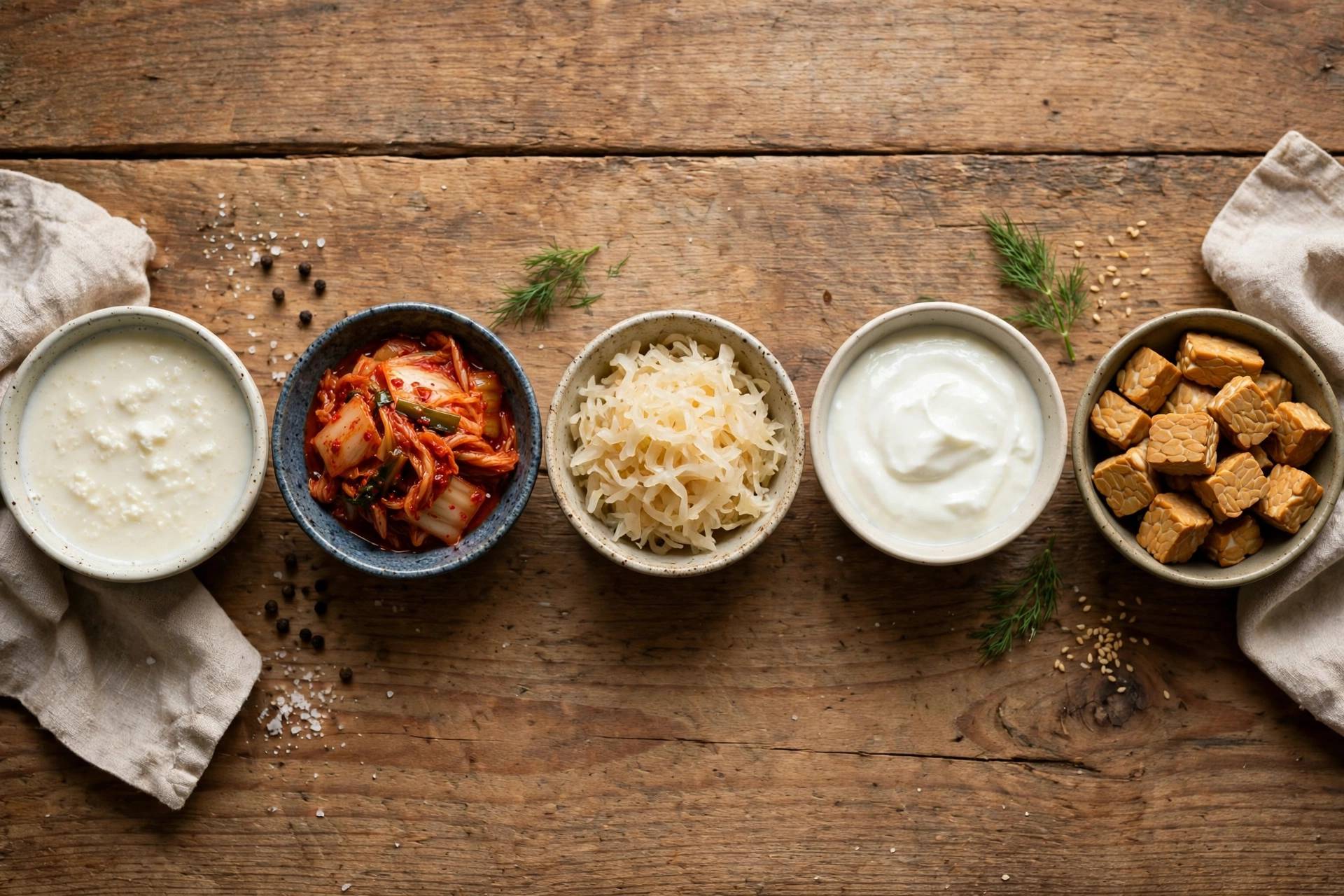
- Kefir, kimchi, sauerkraut, yogurt with live cultures, and tempeh are easy starting points, and small daily portions are a sensible way to begin.
- Kimchi, sauerkraut, and miso can be high in sodium, so portion size matters, and anyone with an ongoing digestive condition should talk to a healthcare professional before making big changes.
Introduction
Fermented foods have been part of human diets for thousands of years, long before refrigeration existed. People fermented milk into yogurt and kefir, cabbage into sauerkraut and kimchi, and soybeans into tempeh and miso — originally to preserve food, but also because fermentation creates flavours that fresh ingredients simply do not have.
In recent years, these traditional foods have attracted fresh attention from researchers studying the gut microbiome: the community of microorganisms living in the digestive tract. A growing body of research suggests that what we eat shapes that community, and fermented foods are among the most studied dietary sources of live microorganisms. This article explains what fermented foods are, how they relate to gut health in general terms, which ones are worth knowing, and how to enjoy them safely as part of an everyday diet.
What Are Fermented Foods?
Fermented foods are foods and drinks produced or preserved through the action of microorganisms and their enzymes, according to a review published in the peer-reviewed journal Foods and indexed by the U.S. National Library of Medicine (PubMed). During fermentation, bacteria and yeasts convert components of the food — often sugars — into acids, gases, or alcohol. That is what gives sourdough its tang, yogurt its tartness, and kimchi its characteristic bite (PubMed, https://pubmed.ncbi.nlm.nih.gov/30513869/).
The microorganisms most often involved are lactic acid bacteria, which produce lactic acid, and various yeasts. A review published in PMC, the U.S. National Institutes of Health's free archive of biomedical literature, notes that fermented foods can contain probiotics, lactic acid bacteria, yeasts, organic acids, and antimicrobial compounds, and that these components help balance the gut microbiome and support digestive health (PMC, https://pmc.ncbi.nlm.nih.gov/articles/PMC11311591/).
It is worth understanding one important distinction: not every fermented food still contains live microorganisms by the time you eat it. Fermentation changes a food's chemistry regardless, but live cultures survive only if the food has not been heat-treated afterwards. Baking kills the microbes in sourdough, cooking tempeh kills its live cultures, and pasteurized sauerkraut or shelf-stable pickles are heated during processing. The same review literature notes that probiotics are, by definition, live microorganisms — so if live microbes are what you are after, the label and the storage matter: refrigerated, unpasteurized products are the ones most likely to still contain them.
How Fermented Foods Relate to Gut Health
The gut microbiome influences digestion, and research increasingly links its balance with immune function and general well-being. The PMC review cited above reports that fermented foods can increase the diversity of the gut microbiome and reduce markers of inflammation, and that their probiotics help balance gut bacteria and support digestive health (PMC, https://pmc.ncbi.nlm.nih.gov/articles/PMC11311591/).
A second PMC review explains some of the mechanisms involved. It describes how compounds produced during fermentation — including exopolysaccharides secreted by lactic acid bacteria in kefir and yogurt — can support the integrity of the gut's mucosal barrier, modulate intestinal immunity, and selectively support beneficial gut bacteria. The same review notes that fermented foods also act as natural sources of fermentable fibres and other substrates that feed beneficial microbes, giving them both probiotic and prebiotic characteristics (PMC, https://pmc.ncbi.nlm.nih.gov/articles/PMC12249102/).
A large-scale genome study published in Nature Communications and indexed by PubMed adds an important nuance. Analysing thousands of human gut samples, researchers found that lactic acid bacteria from food do appear in the gut, but their prevalence and abundance are generally low and linked to age, lifestyle, and geography. The study concluded that fermented foods can indeed be regarded as a possible source of gut lactic acid bacteria — but it also shows why fermented foods are best seen as one part of a varied diet, not a quick fix (PubMed, https://pubmed.ncbi.nlm.nih.gov/32451391/).
In short, the evidence points in a positive direction, but it does not support dramatic claims. Effects vary by food, by strain, and by person, and research is still ongoing. A varied diet rich in fibre, alongside fermented foods, is the pattern most consistently associated with a healthy gut in the research literature.
Meet the Main Players
Kefir
Kefir is a fermented milk drink made by adding kefir grains — clusters of bacteria and yeasts — to milk. It is thinner and tangier than yogurt, and it is widely described in the research literature as containing a broader range of bacterial strains and yeasts than typical yogurt. A PMC review of the gut microbiome lists kefir among probiotic-rich foods and notes that its fermentation microbes produce compounds that support the gut's mucosal barrier (PMC, https://pmc.ncbi.nlm.nih.gov/articles/PMC6506970/ and https://pmc.ncbi.nlm.nih.gov/articles/PMC12249102/). Drink it plain, blend it into smoothies, or use it as a base for salad dressing. Water kefir, made with sugar water rather than milk, is a dairy-free alternative.
Kimchi
Kimchi is a traditional Korean dish of salted, fermented vegetables — most famously napa cabbage and radish — seasoned with chilli, garlic, ginger, and other flavourings. The PMC gut microbiome review lists kimchi among foods rich in lactic acid bacteria, and notes that fermented vegetables of this kind are valuable for gastrointestinal health (PMC, https://pmc.ncbi.nlm.nih.gov/articles/PMC6506970/). Buy refrigerated kimchi if you want live cultures, and keep portions modest: kimchi is typically high in sodium.
Sauerkraut
Sauerkraut is finely shredded cabbage fermented in brine. Raw, refrigerated sauerkraut contains live lactic acid bacteria, while shelf-stable jars are usually pasteurized and do not. The same PMC review lists sauerkraut among probiotic-rich fermented vegetables (PMC, https://pmc.ncbi.nlm.nih.gov/articles/PMC6506970/). A spoonful or two alongside a meal is a typical serving, and rinsing it can reduce the salt if sodium is a concern.
Yogurt
Yogurt is made by fermenting milk with bacterial cultures. Not all yogurts contain live cultures at the point of eating, so look for a "live and active cultures" claim on the label and prefer plain, unsweetened versions — flavoured yogurts often carry a lot of added sugar. The PMC review of fermented foods includes yogurt among the foods whose probiotics help balance the gut microbiome (PMC, https://pmc.ncbi.nlm.nih.gov/articles/PMC11311591/). Yogurt is also a useful source of protein and calcium in an everyday diet.
Tempeh
Tempeh is a firm cake of fermented soybeans, originally from Indonesia. It is usually cooked before eating, which means its live cultures do not survive — but fermentation still improves its digestibility and nutrient availability, and it remains a protein-rich, fibre-containing food. A PMC review notes that fermented soybean products such as tempeh contain increased levels of bioactive compounds that foster beneficial gut microbial communities (PMC, https://pmc.ncbi.nlm.nih.gov/articles/PMC12249102/). Slice it, marinate it, and pan-fry or bake it as a savoury main.
How to Add Fermented Foods to Everyday Meals
You do not need to overhaul your diet. Small, regular portions are the easiest approach, and they are also the most consistent with how these foods are traditionally eaten:
- Breakfast: Plain yogurt or kefir with oats and fruit, or a smoothie blended with kefir.
- Lunch: A spoonful of sauerkraut or kimchi beside a sandwich, grain bowl, or soup.
- Dinner: Tempeh as the protein in a stir-fry, or miso stirred into soup after cooking (adding miso to boiling liquid can destroy its live cultures, so stir it in once the soup has cooled slightly).
- Snacks: A small glass of kefir, or yogurt with a handful of berries.
Pairing fermented foods with fibre-rich foods — vegetables, legumes, whole grains, fruit — is a sensible strategy. The PMC review on fermented foods as functional systems notes that fermented foods naturally contain fermentable substrates that selectively feed beneficial gut microbes, so combining them with fibre-rich meals supports the same goal from two directions (PMC, https://pmc.ncbi.nlm.nih.gov/articles/PMC12249102/).
If you are new to fermented foods, start with a small amount — a spoonful or a small glass — and build up over a couple of weeks. Some temporary gas or bloating is common when the gut adjusts to new foods, especially high-fibre ones, and a gradual start makes the adjustment easier.
Safety Notes Worth Knowing
Fermented foods are everyday foods for most people, but a few cautions apply:
- Sodium. Kimchi, sauerkraut, pickles, and miso are salty by nature, because salt is part of the fermentation process. If you are watching your blood pressure or sodium intake, keep portions small and consider rinsing sauerkraut or kimchi before eating.
- Pasteurization and live cultures. If you specifically want live cultures, choose refrigerated, unpasteurized products and check the label. Shelf-stable jars, canned pickles, and vinegar-pickled products are generally not live-culture foods, even when they are marketed as "fermented."
- Added sugar and alcohol. Some kombucha and flavoured yogurts contain significant added sugar, and kombucha can contain trace alcohol. Read the label if either matters to you.
- Weakened immunity and pregnancy. People with a weakened immune system, and anyone who is pregnant, should be cautious with unpasteurized products and talk to their healthcare professional about which fermented foods are appropriate. Yogurt and kefir made from pasteurized milk with cultures added afterwards are generally treated differently from raw-milk products, but individual advice matters.
- Ongoing digestive symptoms. If you have persistent digestive symptoms, an existing gut condition, or you take medicines that affect digestion or immunity, check with a healthcare professional before adding large amounts of live-culture foods. Fermented foods are not a treatment for any digestive condition, and they should not replace medical care.
Frequently Asked Questions
Do fermented foods and probiotic supplements do the same thing?
Not exactly. Fermented foods provide live microorganisms as part of a whole food, along with nutrients and fibre, while supplements provide specific strains in measured doses. The PMC review of fermented foods notes that probiotics can be consumed either in the diet or in supplement form, and that research into their health effects is continuing (PMC, https://pmc.ncbi.nlm.nih.gov/articles/PMC11311591/). Neither is a substitute for medical treatment.
Does cooking destroy the benefits of fermented foods?
Cooking destroys live cultures, but not all value. Fermented foods that are cooked — tempeh, sourdough, miso stirred into hot soup — still offer flavour, improved digestibility, and nutrients. Only the live-microbe component is lost, so if live cultures matter to you, eat at least some fermented foods raw or unheated.
How much fermented food should I eat each day?
There is no single official recommended amount. Traditional diets include small amounts regularly — a spoonful of sauerkraut or kimchi, a serving of yogurt, or a glass of kefir. Starting small and building up gradually is the most widely suggested approach, and variety across different fermented foods gives you a broader range of microbes.
Can children eat fermented foods?
Plain yogurt and kefir are ordinary foods for children in many diets. Spicy kimchi, high-sodium pickles, and kombucha (which can contain trace alcohol and sugar) are less suitable for young children. If you are unsure, ask a paediatrician or registered dietitian.
Is sauerkraut from a shelf-stable jar still good for me?
It is still a vegetable food with fibre and some nutrients, but pasteurization means it is unlikely to contain live cultures. For live cultures, choose raw, refrigerated sauerkraut and check the label.
Medical Disclaimer
This article is for general information only and is not medical advice. Talk to a healthcare professional about your own situation, especially if you have a digestive condition, a weakened immune system, or you are pregnant, before making significant changes to your diet.
Sources
- PMC review, "Probiotic Functions in Fermented Foods" — https://pmc.ncbi.nlm.nih.gov/articles/PMC11311591/
- PMC review, "Fermented Foods as Functional Systems" — https://pmc.ncbi.nlm.nih.gov/articles/PMC12249102/
- PMC review, "The Gut Microbiome: Unleashing the Doctor Within" — https://pmc.ncbi.nlm.nih.gov/articles/PMC6506970/
- Nature Communications study on lactic acid bacteria from food and the gut microbiome (PubMed) — https://pubmed.ncbi.nlm.nih.gov/32451391/
- Review, "One Health, Fermented Foods, and Gut Microbiota" (PubMed) — https://pubmed.ncbi.nlm.nih.gov/30513869/
By Putri PD