
Probiotics vs Prebiotics: What's the Difference and Do You Need Both?

Key Takeaways
- Probiotics are live beneficial bacteria found in fermented foods like yogurt, kefir, and kimchi.
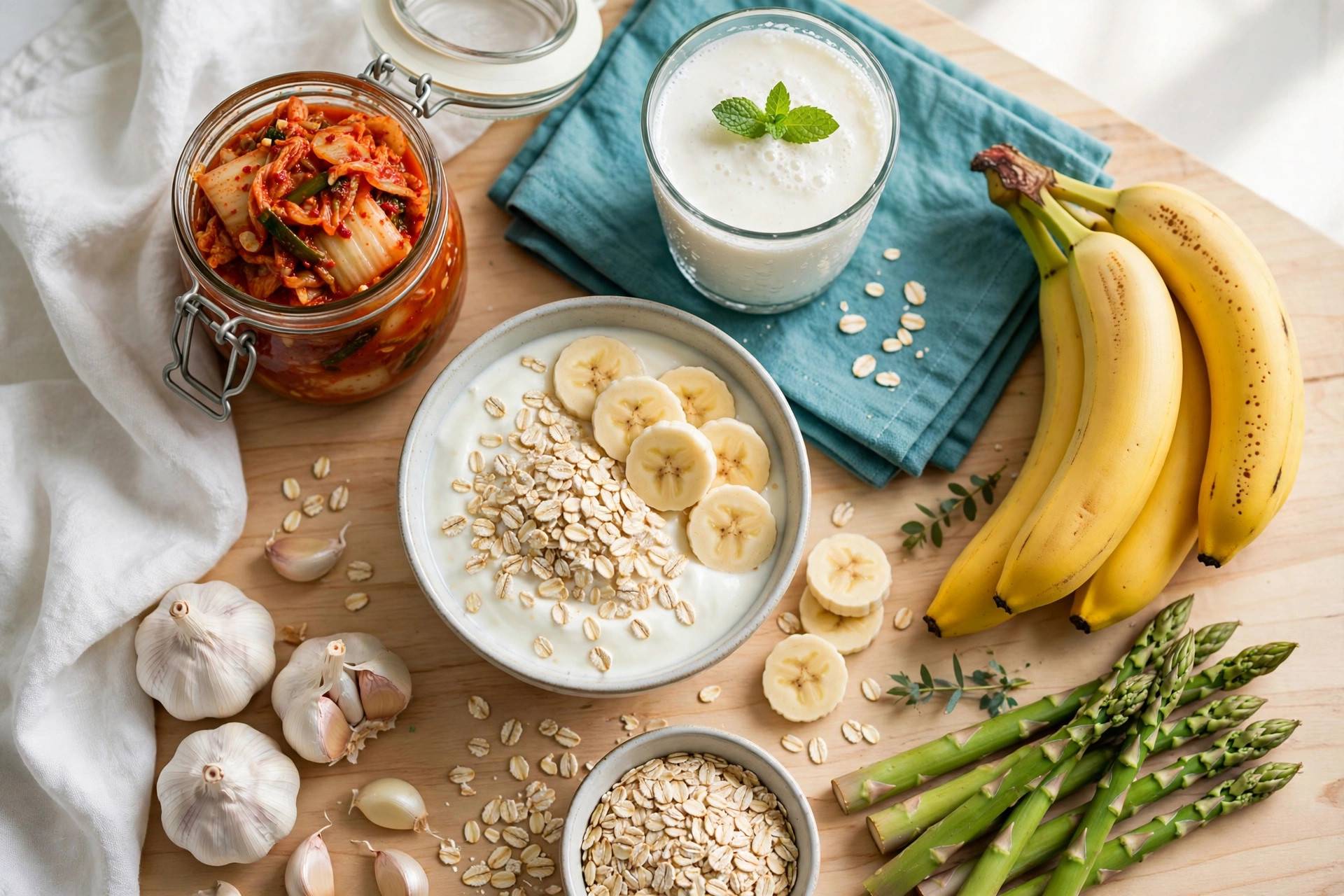
- Prebiotics are special fibers that feed those beneficial bacteria — found in garlic, onions, bananas, oats, and asparagus.
- Think of it like a garden: probiotics are the seeds, prebiotics are the fertilizer.
- You don't strictly need supplements — most people can get both from food.
- Benefits are strain-specific: a probiotic that helps one condition may do nothing for another.
Walk down any supplement aisle and you'll see the words everywhere: probiotics in yogurt, prebiotics in granola bars, "synbiotics" in expensive capsules. They sound similar, they're often sold together, and most people use the terms interchangeably.
They're not the same thing. Not even close, actually. And understanding the difference matters — because buying the wrong one (or taking one when you need the other) is an easy way to waste money.
This guide explains exactly what probiotics and prebiotics are, how they work together, the best food sources for each, and the honest answer to the question everyone asks: do you actually need both?
Disclaimer: This article is for informational purposes only and is not medical advice. Gut health is highly individual. If you have a digestive condition, take immunosuppressants, or are seriously ill, talk to your healthcare provider before starting any probio
What Are Probiotics?
The formal definition, from the International Scientific Association for Probiotics and Prebiotics (ISAPP): "live microorganisms that, when administered in adequate amounts, confer a health benefit on the host." In plain language:
- Live (must be alive when consumed — "live and active cultures" on yogurt matters)
- Microorganisms (mostly Lactobacillus and Bifidobacterium bacteria, plus yeast Saccharomyces boulardii)
- Adequate amounts (typically billions of CFUs)
- Health benefit — benefits are strain-specific. A probiotic that works for one condition may do nothing for another.
What Are Prebiotics?
If probiotics are the seeds, prebiotics are the fertilizer. Prebiotics are specific fibers — inulin, fructooligosaccharides (FOS), galactooligosaccharides (GOS), resistant starch, beta-glucan — that your body can't digest but your gut bacteria ferment. This produces short-chain fatty acids (like butyrate) that nourish colon cells, maintain the gut barrier, support immune function, and improve mineral absorption.
Probiotics vs Prebiotics: Side-by-Side Comparison
| Probiotics | Prebiotics | |
|---|---|---|
| What they are | Live beneficial microorganisms | Non-digestible fibers |
| What they do | Add good bacteria to your gut | Feed the good bacteria already there |
| Garden analogy | Seeds | Fertilizer |
| Main sources | Fermented foods, supplements | High-fiber plant foods |
| Are they alive? | Yes — must be alive to work | No — they're fibers |
| Killed by heat? | Yes | No (heat-stable) |
| Do you need them daily? | Consistency helps; effects are temporary | Yes — your bacteria eat every day |
Best Probiotic Foods
- Yogurt — check label for "live and active cultures."
- Kefir — wider variety of strains than yogurt.
- Kimchi — refrigerated only (shelf-stable is pasteurized).
- Sauerkraut — only refrigerated kind counts.
- Miso — stir in after cooking (boiling kills cultures).
- Tempeh — fermented soybeans, nutritious though cooking kills most cultures.
- Kombucha — contains live cultures but also sugar and caffeine.
- Traditionally fermented pickles — salt-brine fermented, not vinegar.
Best Prebiotic Foods
- Garlic — rich in inulin and FOS.
- Onions — same compounds as garlic.
- Leeks — very high in inulin.
- Asparagus — contains inulin.
- Bananas — slightly green bananas contain resistant starch.
- Oats — rich in beta-glucan fiber.
- Apples — pectin fiber, eat the skin.
- Barley — higher in beta-glucan than oats.
- Flaxseeds — ground, not whole.
- Chicory root — richest natural source of inulin.
- Jerusalem artichokes — extremely high in inulin, start small.
Do You Need Both? The Honest Verdict
Yes — but probably from food, not from two supplement bottles.
- If you eat fermented foods a few times a week AND plenty of fiber: you're already doing the combo.
- If your diet is low in fiber: fix the fiber first — cheaper, safer, whole-body benefits.
- Probiotic supplements make sense in specific situations: during/after antibiotics, some IBS symptoms, or doctor-recommended strains.
- The "just in case" daily capsule for general wellness has thin evidence — spend the money on groceries instead.
Bottom line: a bowl of kefir with banana and oats gives you probiotics + prebiotics + breakfast in one.
Supplements vs Food Sources
| Food sources | Supplements | |
|---|---|---|
| Cost | Groceries you'd buy anyway | $20–60/month |
| Strain diversity | Naturally varied | Usually 1–10 selected strains |
| Extra nutrition | Yes | No |
| Best for | Everyday gut maintenance | Targeted situations |
| Risk | Minimal | Low but not zero |
Side Effects and Who Should Be Careful
- Common and mild: gas, bloating when starting — fades in 1–2 weeks.
- Rare but serious: immunocompromised or critically ill people have small infection risk — consult a doctor first.
- Prebiotic fiber: too much too fast causes gas — ramp up gradually.
Frequently Asked Questions
Q: What's the difference between probiotics and prebiotics?
A: Probiotics are live beneficial bacteria (yogurt, kefir); prebiotics are fibers that feed gut bacteria (garlic, oats). Probiotics add microbes; prebiotics nourish them.
Q: Do I need to take probiotics and prebiotics together?
A: They work well together, but food covers both — fix fiber first.
Q: When is the best time to take probiotics?
A: With or after a meal; consistency matters more than timing.
Q: How long does it take for probiotics to work?
A: 2–4 weeks of consistent use for digestive changes; effects are strain-specific.
Q: Can I get enough from food alone?
A: For most healthy people, yes — fermented foods several times a week plus 25–30g daily fiber.
Sources & References
- International Scientific Association for Probiotics and Prebiotics (ISAPP) — Probiotics: https://isappscience.org/probiotics/
- ISAPP — Prebiotics: https://isappscience.org/prebiotics/
- NIH NCCIH — "Probiotics: What You Need To Know": https://www.nccih.nih.gov/health/probiotics-what-you-need-to-know
- Cleveland Clinic — "Probiotics": https://my.clevelandclinic.org/health/treatments/14598-probiotics
- Cleveland Clinic — "What Are Prebiotics?": https://my.clevelandclinic.org/health/articles/prebiotics
Written by Putri PD. Last updated: October 2026.