
Iron Deficiency Anemia: 12 Signs, Causes, and the Best Iron-Rich Foods
You're sleeping eight hours and still waking up exhausted. You get winded climbing stairs that never used to bother you. Your skin looks paler than usual, and your hairbrush seems to be collecting more hair than it should.
It's easy to blame all of that on stress or getting older. But one of the most common — and most overlooked — causes is low iron. Iron deficiency is considered the most widespread nutritional deficiency in the world, and when it progresses to anemia, it can quietly drain your energy, focus, and strength.
This guide covers the 12 signs of iron deficiency anemia, why it happens, the best iron-rich foods to rebuild your levels, and the important reasons why you should get tested before reaching for a supplement.
Quick note: This article is for general information only and isn't medical advice. Iron supplements can be harmful if you don't actually need them, and unexplained iron deficiency in adults sometimes signals bleeding somewhere that needs investigating. Get a blood test first — then treat.
What Is Iron Deficiency Anemia?
Your red blood cells carry oxygen around your body using a protein called hemoglobin — and hemoglobin can't be made without iron. When iron stores run low:
- First, your iron reserves (stored as ferritin) drain away. You may feel fine at this stage.
- Next, iron delivery to new red blood cells falls short.
- Finally, hemoglobin drops — that's iron deficiency anemia, and it's when symptoms usually become hard to ignore.
Iron deficiency is a process, not a switch. Catching it early, before anemia develops, is much easier than rebuilding from a deep deficit.
Women of childbearing age are at highest risk because of menstrual blood loss and pregnancy, but iron deficiency can affect anyone — including men and older adults, in whom it should always prompt a search for the cause.
12 Signs of Iron Deficiency Anemia
1. Fatigue that rest doesn't fix
The hallmark symptom. When tissues get less oxygen, everything costs more effort. This is a deep, heavy tiredness — not ordinary end-of-day sleepiness.
2. Pale skin
Hemoglobin gives blood its red color. With less of it, skin — especially the face, inner eyelids, and nail beds — can look noticeably paler. (This sign is harder to spot on darker skin; check the inner lower eyelid instead.)
3. Shortness of breath
Tasks that never winded you — carrying groceries, climbing one flight of stairs — may leave you breathless as your body struggles to deliver enough oxygen.
4. Headaches and dizziness
Low oxygen delivery can trigger headaches, lightheadedness, and a woozy feeling when you stand up.
5. Cold hands and feet
Poor circulation of oxygenated blood can leave extremities feeling cold even in a warm room.
6. Brittle nails and hair loss
Nails may become thin, brittle, or spoon-shaped (curving upward at the edges) in more advanced deficiency. Hair shedding can increase too.
7. Restless legs
An uncomfortable urge to move your legs, especially at night, is strongly associated with low iron — even before anemia appears.
8. Unusual cravings (pica)
Craving non-food items like ice, clay, dirt, or raw starch is a classic, peculiar sign of iron deficiency. Chewing ice compulsively is the most common version.
9. Rapid or irregular heartbeat
With less hemoglobin, the heart works harder to move oxygen around. You may notice palpitations or a racing pulse with mild exertion.
10. Sore tongue and mouth cracks
A swollen, sore, or unusually smooth tongue and painful cracks at the corners of the mouth can all point to iron deficiency.
11. Frequent infections
Iron plays a role in immune function. Getting sick often can be one more piece of the puzzle.
12. Poor concentration
Brain fog, forgetfulness, and difficulty focusing are common complaints — your brain is a heavy oxygen user, and it notices the shortfall.
One or two of these symptoms alone doesn't diagnose anything — they overlap with many conditions, including vitamin B12 deficiency, which can cause similar fatigue and brain fog. A blood test sorts it out quickly.
What Causes Iron Deficiency?
Iron deficiency always has a reason. The four main categories:
- Blood loss — the most common cause in adults. Heavy periods are a leading culprit in younger women. In men and postmenopausal women, slow bleeding from the digestive tract (ulcers, polyps, hemorrhoids, or more serious conditions) is a key possibility that doctors take seriously.
- Increased demand — pregnancy dramatically raises iron needs, as do growth spurts in children and teens.
- Low intake — diets with little meat, poorly planned vegetarian or vegan diets, and generally restricted eating can fall short.
- Poor absorption — celiac disease, inflammatory bowel disease, gastric bypass surgery, and some medications (including long-term acid blockers) can reduce how much iron you absorb from food.
Frequent blood donation can also deplete stores over time.
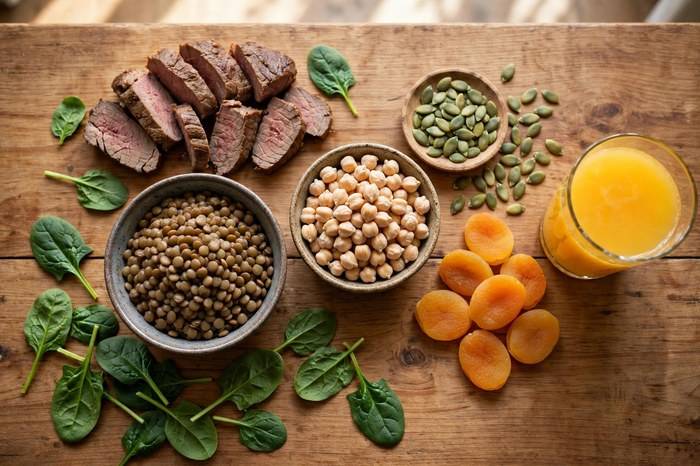
The Best Iron-Rich Foods
Food iron comes in two forms, and the difference matters:
- Heme iron (from animal foods) — absorbed efficiently, roughly 15–35% of what you eat.
- Non-heme iron (from plant foods and fortified products) — absorbed less efficiently, roughly 2–20%, and heavily influenced by what else is on the plate.
| Heme iron sources | Approx. iron | Non-heme iron sources | Approx. iron |
|---|---|---|---|
| Beef (100 g / 3.5 oz, cooked) | ~2.5–3 mg | Lentils (1 cup, cooked) | ~6.6 mg |
| Oysters (100 g) | ~5–7 mg | White beans (1 cup, cooked) | ~5–6 mg |
| Sardines (100 g) | ~2.9 mg | Spinach (1 cup, cooked) | ~6.4 mg |
| Turkey, dark meat (100 g) | ~1.4–2 mg | Tofu (½ cup) | ~3.4 mg |
| Chicken (100 g) | ~1 mg | Fortified breakfast cereal (1 serving) | ~8–18 mg (varies) |
| Eggs (1 large) | ~0.9 mg | Pumpkin seeds (30 g / 1 oz) | ~2.5 mg |
(Values are approximate and vary by product and preparation.)
How to absorb more iron from food
- Pair plant iron with vitamin C. Vitamin C can multiply non-heme iron absorption. Squeeze lemon on lentils, have bell peppers with beans, or drink a small glass of orange juice with a spinach meal.
- Keep tea and coffee away from iron-rich meals. The tannins in tea and coffee can inhibit iron absorption when consumed with food. Enjoy them between meals instead.
- Don't take calcium with iron. Calcium supplements and large amounts of dairy at the same meal can compete with iron absorption. Separate them by a couple of hours.
- Cook in cast iron. Cooking acidic foods (like tomato sauce) in a cast-iron pan can add small amounts of iron to the meal.
- Combine heme and non-heme. A little meat in a meal boosts absorption of the plant iron served alongside it — chili with beef and beans is a classic for a reason.
An Iron-Boosting Day of Eating
You don't need exotic ingredients to eat more iron — you need deliberate pairings. Here's what a practical iron-focused day looks like:
- Breakfast: Fortified oatmeal or cereal with strawberries (vitamin C) — and move your coffee or tea to mid-morning instead of with the meal.
- Lunch: A lentil and white-bean soup with a squeeze of lemon and a bell-pepper salad on the side. Legumes plus vitamin C is one of the most efficient plant-based combinations there is.
- Snack: A handful of pumpkin seeds with an orange, or dried apricots with a few walnuts.
- Dinner: Beef and bean chili with tomatoes (heme iron + non-heme iron + vitamin C in one pot), or, for a meat-free version, tofu and spinach stir-fry with ginger, garlic, and a citrus-based sauce.
- Evening: If you enjoy an herbal tea, have it after dinner rather than with it — your dessert of dark chocolate, incidentally, contributes a little iron too.
Notice the pattern: iron source + vitamin C source, with tea, coffee, and calcium kept a respectful distance away. That pattern matters more than any single "superfood."
How Iron Deficiency Is Diagnosed
A simple blood draw is all it takes. Doctors typically check:
- Complete blood count (CBC) — shows hemoglobin and red blood cell size (iron-deficient cells are smaller and paler).
- Ferritin — reflects your iron stores; it's the earliest marker to fall.
- Sometimes transferrin saturation and related iron studies.
Which tests you need at which age is covered in our guide to medical check-ups by age. If iron is low, the follow-up question — why — matters just as much as the number.
A Word of Caution About Iron Supplements
Iron pills are the standard treatment for confirmed deficiency, but they're not a harmless "just in case" supplement:
- Excess iron can damage the liver and other organs, and some people have a genetic condition (hemochromatosis) that causes iron overload.
- Supplements commonly cause constipation, nausea, and stomach pain.
- In adults, taking iron without finding the source of the deficiency can mask ongoing bleeding that needs medical attention.
If you're deficient, your doctor will recommend a dose and recheck your levels in a few months. Taking iron with vitamin C or on an empty stomach can improve absorption, though taking it with a little food is fine if it upsets your stomach.
Frequently Asked Questions
How long does it take to correct iron deficiency?
With treatment, hemoglobin often improves within 4–8 weeks, but refilling iron stores (ferritin) typically takes 3–6 months. Stopping as soon as you feel better is a common mistake — stores may still be empty.
Can you be iron deficient without being anemic?
Yes, and it's common. Ferritin can be low while hemoglobin is still normal. This "iron deficiency without anemia" can still cause fatigue, hair shedding, and restless legs, and it's worth discussing with your doctor.
Which food has the most iron?
Per serving, fortified cereals, shellfish like oysters and clams, organ meats such as liver, and legumes like lentils and white beans rank highest. Liver is extremely rich in iron but also very high in vitamin A, so it's best eaten occasionally rather than daily — and avoided in excess during pregnancy.
Does cooking spinach destroy its iron?
No. Cooking doesn't destroy iron — it's a mineral. In fact, cooked spinach delivers far more iron per cup simply because it wilts down. Spinach does contain oxalates that reduce absorption somewhat, so pair it with vitamin C-rich foods.
Can drinking tea cause iron deficiency?
Tea alone doesn't cause deficiency in someone eating enough iron, but drinking strong tea with every meal can reduce absorption from plant foods — a real concern if your intake is already borderline. Shifting tea to between meals is an easy fix.
When to See a Doctor
- You recognize several of the signs above, especially persistent fatigue
- You're a man or a postmenopausal woman with low iron — the cause needs investigating
- You notice black or bloody stools, unexplained weight loss, or heavy menstrual bleeding
- You're pregnant, or planning to be — iron needs rise sharply
- Symptoms like chest pain, fainting, or severe breathlessness appear — seek care promptly
The Bottom Line
Iron deficiency anemia announces itself quietly: tiredness that won't lift, pale skin, breathlessness, and strange cravings. The fix is straightforward once you know the number — a blood test, iron-rich meals built around smart pairings, and treatment for the underlying cause.
Don't guess and supplement blindly. Test first, eat deliberately, and let a follow-up blood check prove your levels are climbing.
Medical disclaimer: The content on HealthyZo is for informational purposes only and is not a substitute for professional medical advice, diagnosis, or treatment. Always seek the advice of your physician or another qualified health provider with any questions about a medical condition.