
How to Improve Gut Health Naturally
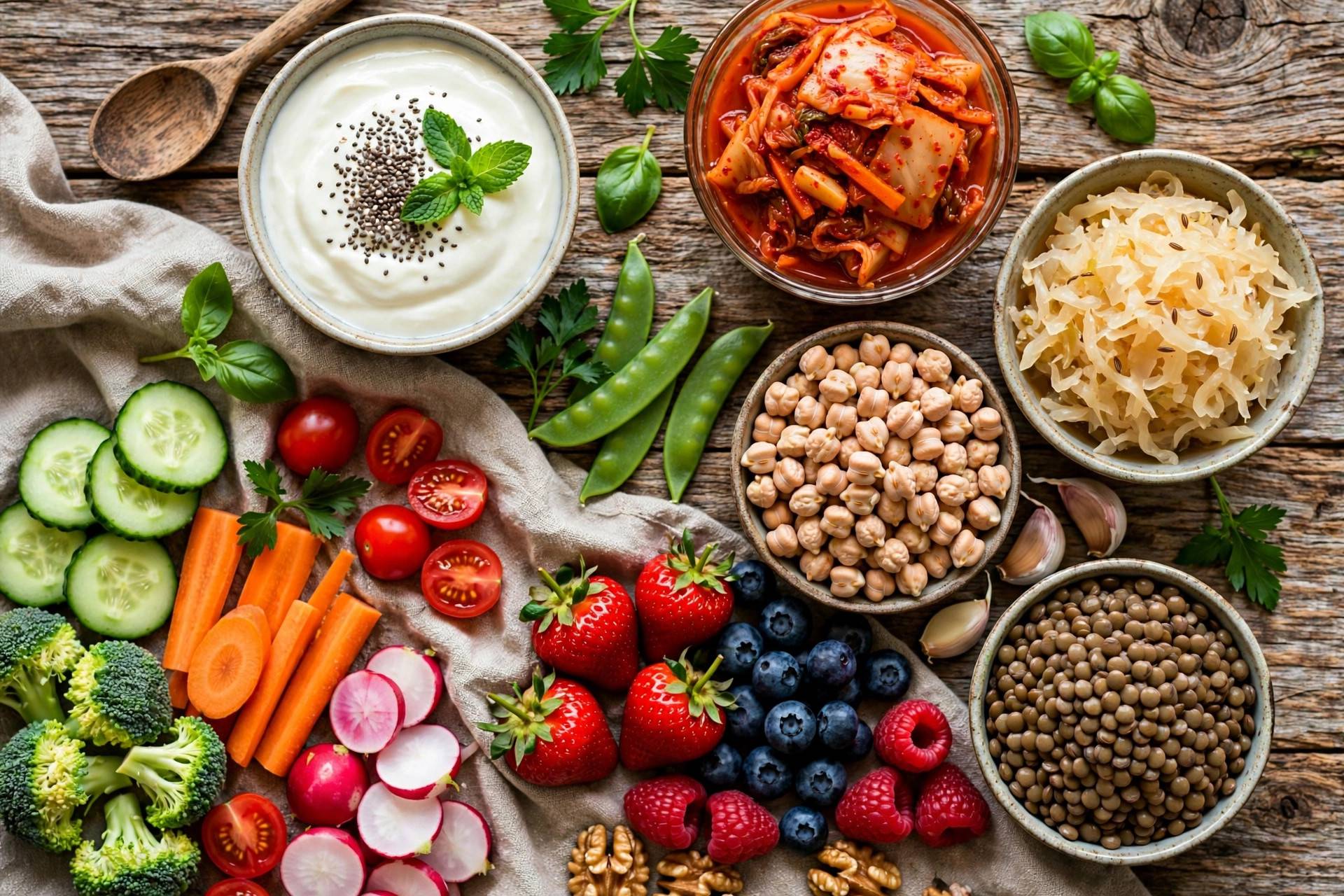
Your gut is home to trillions of microbes that influence far more than digestion — they affect your immunity, your mood, your skin, even how well you sleep. When that microbial community is out of balance, the effects ripple outward. The good news: your gut responds quickly to the right inputs, and most of them are things you can start today.
This guide covers the science-backed ways to improve gut health naturally — what to eat, what to avoid, how lifestyle factors fit in, and realistic timelines for feeling a difference.
Quick note: This article is for general information only and isn't medical advice. Persistent digestive symptoms (bleeding, unexplained weight loss, severe pain) need medical evaluation — don't self-diagnose serious conditions.
Signs your gut might be unhealthy
Frequent bloating, gas, or abdominal discomfort
Irregular bowel movements — constipation, diarrhea, or unpredictable swings
Food intolerances that seem to be multiplying
Constant fatigue or brain fog
Skin issues (eczema, acne flares) with no clear trigger
Frequent colds — much of the immune system lives in gut tissue
Strong sugar cravings (imbalanced microbes can drive them)
Mood dips — the gut produces much of the body's serotonin supply
One or two of these occasionally is normal. A persistent cluster is worth addressing.
The foundations: what a healthy gut needs
Before supplements or special protocols, the basics do most of the work:
1. Fiber — the #1 lever. Fiber feeds beneficial gut bacteria, which ferment it into short-chain fatty acids (like butyrate) that nourish the gut lining and calm inflammation. Most adults get far less than the recommended ~25–30g daily. The fix: vegetables, legumes, whole grains, fruits, nuts, and seeds — a variety of sources, since different fibers feed different bacteria.
2. Fermented foods. Yogurt, kefir, kimchi, sauerkraut, miso, tempeh, and kombucha deliver live beneficial bacteria directly. A landmark Stanford study found that a diet high in fermented foods increased microbiome diversity and calmed markers of inflammation — one of the strongest findings in nutrition-microbiome research.
3. Water. Fiber without water can worsen constipation. Adequate hydration keeps everything moving.
4. Chewing and eating slowly. Digestion starts in the mouth — enzymes in saliva begin breaking down food, and thorough chewing reduces the workload downstream. Wolfing down meals is a fast track to bloating.
The best foods for gut health
Leafy greens and cruciferous vegetables — fiber plus compounds that support gut lining integrity
Legumes (lentils, chickpeas, black beans) — among the highest-fiber foods per serving
Oats and barley — rich in beta-glucan, a fermentable fiber bacteria love
Berries — fiber plus polyphenols that beneficial bacteria feed on
Garlic, onions, leeks, asparagus — prebiotic fibers (inulin, FOS) that selectively feed good bacteria
Fermented foods — as above; aim for a serving most days
Bone broth — soothing and easy to digest during flare-ups (evidence is mostly traditional, but it's gentle)
Fatty fish — omega-3s support a healthy inflammatory balance in the gut
Probiotics vs. prebiotics: what's the difference?
These get confused constantly, so here's the clean version:
Prebiotics are food for beneficial bacteria — specific fibers (inulin, FOS, GOS) found in garlic, onions, bananas, oats, and legumes. Think of them as fertilizer.
Probiotics are the live bacteria themselves — in fermented foods or supplements. Think of them as seeds.
You need both: seeds without fertilizer don't thrive, and fertilizer without the right seeds has limited effect. Our full probiotics vs. prebiotics guide goes deeper into strains, doses, and what the evidence actually supports.
What harms gut health (and what to cut back on)
Ultra-processed foods — emulsifiers, artificial sweeteners, and low fiber content are all associated with less diverse microbiomes
Excess alcohol — disrupts the gut barrier and microbial balance
Artificial sweeteners — some (saccharin, sucralose) have been shown to alter gut bacteria in studies
Chronic NSAID use — ibuprofen and friends can damage the gut lining with long-term use
Unnecessary antibiotics — life-saving when needed, but they carpet-bomb the microbiome; avoid pressuring doctors for them with viral illnesses
Chronic stress — directly alters gut motility, sensitivity, and barrier function via the gut-brain axis
Stress, sleep, and the gut-brain axis
Your gut and brain are in constant two-way communication via the vagus nerve, hormones, and microbial metabolites. This isn't metaphorical — stress measurably changes gut bacteria composition and gut permeability, and gut inflammation sends signals that affect mood and cognition.
Practical implications:
Daily stress management (walks, breathing exercises, real downtime) is a gut health intervention, not just a mental health one
Poor sleep disrupts the microbiome — one study found just two nights of partial sleep deprivation altered gut bacteria. Prioritize 7–8 hours
Regular moderate exercise increases microbial diversity — another reason movement matters beyond calories
How long does it take to heal your gut?
Honest answer: it depends on the starting point, but the microbiome responds faster than most people expect:
Days: dietary changes start shifting bacterial populations within 24–48 hours
2–4 weeks: most people notice digestive improvements (less bloating, more regularity) with consistent fiber, fermented foods, and trigger reduction
2–3 months: more entrenched patterns (food sensitivities, inflammation markers) typically need this long of consistent effort
Longer: post-antibiotic recovery or long-standing dysbiosis can take 6+ months
Consistency beats intensity — a moderately good diet sustained for months outperforms a perfect week followed by collapse.
Should you get your microbiome tested?
Direct-to-consumer gut microbiome tests are popular but limited: the science of interpreting results for individuals is still young, recommendations are often generic, and tests can disagree with each other. They're interesting but not necessary — the foundational advice (fiber diversity, fermented foods, less ultra-processed food) doesn't change based on test results. Save your money unless you're working with a knowledgeable clinician on a specific problem.
Gut health and immunity
Roughly 70% of the immune system resides in gut-associated lymphoid tissue — your gut is arguably your largest immune organ. A diverse, well-fed microbiome trains immune cells, maintains the gut barrier that keeps pathogens out, and produces anti-inflammatory compounds. This is why the same habits that improve digestion also reduce how often you get sick. For the nutrition side of immunity, see our guide to foods that boost the immune system.
When gut trouble might be something more
See a doctor if you have:
Blood in stool or black, tarry stools
Unintentional weight loss
Severe or persistent abdominal pain
Symptoms that wake you from sleep
Family history of colon cancer, celiac, or IBD with new symptoms
Heartburn that doesn't respond to lifestyle changes — see our acid reflux guide
Frequently asked questions
What's the fastest way to improve gut health? There's no instant fix, but the highest-impact quick wins are: add a daily serving of fermented food, increase fiber gradually, cut ultra-processed foods, and fix your sleep. Most people feel a difference in 2–4 weeks.
Are probiotic supplements worth it? For general gut health, fermented foods are the better first step — cheaper, with broader bacterial diversity. Targeted probiotic strains help specific conditions (some IBS symptoms, antibiotic-associated diarrhea). Generic "probiotic" pills for everyone have thin evidence.
Does coffee harm gut health? For most people, no — coffee is a significant source of polyphenols and is associated with greater microbial diversity in studies. If it triggers reflux or urgency for you personally, that's individual, not universal.
How do I know if my gut is healing? Track concrete markers: bloating frequency, stool regularity and form, energy levels, skin clarity, and how you feel after meals. Improvements in these over weeks are the real signal — not test kits or internet symptom quizzes.