
20 Heart-Healthy Foods Cardiologists Actually Recommend

Key Takeaways
- Fatty fish, oats, berries, leafy greens, olive oil, and beans top nearly every cardiologist's list.
- Soluble fiber (oats, beans, lentils) helps lower LDL cholesterol; omega-3s (salmon, walnuts, flaxseeds) support healthy triglycerides.
- The Mediterranean diet has the strongest research backing for heart health of any eating pattern.
- Processed meats, sugary drinks, trans fats, and excess sodium are what cardiologists most warn against.
- Small swaps matter more than perfection: olive oil instead of butter, oats instead of sugary cereal, fish instead of red meat.
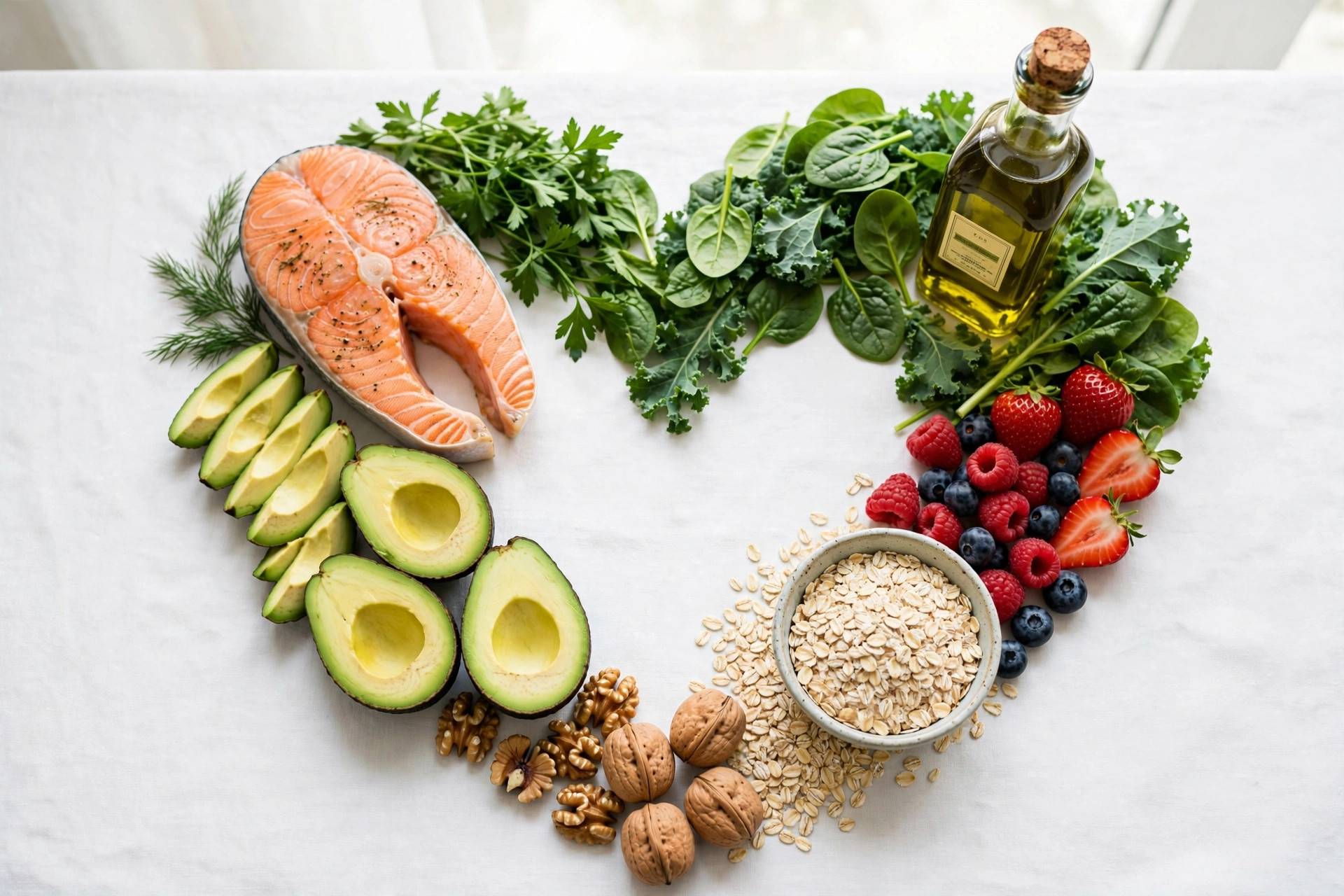
You've heard it a hundred times: "eat heart-healthy foods." But what does that mean at the grocery store? Cardiologists aren't recommending anything exotic — the foods they keep naming are oats, salmon, beans, berries, olive oil. Simple, familiar, affordable foods packed with what your heart needs.
This article is for informational purposes only and is not medical advice. If you have heart disease, high blood pressure, high cholesterol, or take heart medications, talk to your doctor or a registered dietitian before making major dietary changes.
Why Do Cardiologists Keep Recommending the Same Foods?
Decades of research point to the same patterns: people eating more vegetables, fruits, whole grains, legumes, nuts, and fish have fewer heart attacks. The Mediterranean diet has shown impressive results for reducing cardiovascular events. Mechanisms: soluble fiber binds cholesterol (oats, beans); omega-3s support triglycerides (fish, walnuts); potassium balances sodium (greens, beans); antioxidants protect vessels (berries, tomatoes); monounsaturated fats replace saturated fats (olive oil, avocado).
What Are the 20 Best Heart-Healthy Foods?
- Salmon — omega-3s (EPA/DHA) for triglycerides
- Oats — soluble fiber (beta-glucan) lowers LDL
- Berries — antioxidants, anthocyanins
- Leafy greens — potassium, nitrates, vitamin K
- Avocados — monounsaturated fats, potassium
- Olive oil — monounsaturated fats, polyphenols
- Walnuts — omega-3 (ALA), fiber
- Almonds — vitamin E, magnesium
- Beans — soluble fiber, plant protein
- Lentils — fiber, folate, iron
- Quinoa — complete protein, fiber
- Tomatoes — lycopene
- Garlic — allicin, blood pressure support
- Dark chocolate (70%+) — flavanols
- Green tea — catechins
- Oranges — vitamin C, potassium, folate
- Sweet potatoes — potassium, fiber, beta-carotene
- Flaxseeds — omega-3 (ALA), lignans
- Edamame — soy protein, fiber
- Beets — nitrates for blood flow
What Are the 10 Worst Foods for Your Heart?
- Processed meats (bacon, sausage, deli meat)
- Sugary drinks (soda, swee
What Small Swaps Make a Big Difference?
Instead of... Try... Butter on toast Mashed avocado White rice Quinoa or brown rice Sugary soda Sparkling water with lemon Red meat 5x/week Fatty fish 2–3x/week Potato chips Handful of walnuts Sugary cereal Plain oatmeal with berries Frequently Asked Questions
Q: Best single food for heart health?
A: No single winner — but salmon and oats come up most often. Variety across the list matters most.Q: Are eggs bad?
A: For most healthy people, an egg a day is fine. Less concern than processed meats.Q: Is coffee bad?
A: Moderate coffee is fine for most; watch the sugar. Black or with milk is best.Q: How fast can diet help?
A: Blood pressure can improve in weeks; cholesterol in a few months; biggest benefits from years of consistency.Q: Give up red meat completely?
A: No — but less is better; treat as occasional, lean cuts, modest portions.