
Gout and High Uric Acid: Foods to Eat, Foods to Avoid, and How to Lower It
If you've ever had a gout flare, you don't forget it. People describe waking at 2 a.m. with a big toe so painful that even the weight of a bedsheet is unbearable. The joint is red, hot, swollen — and seemingly attacked out of nowhere.
It wasn't out of nowhere. Gout builds quietly for years as uric acid accumulates in the blood, and food and drink choices are among the biggest levers you control. This guide explains what uric acid is, which foods raise it and which help lower it, what to do during a flare, and how to reduce your chances of the next one.
Quick note: This article is for general information only and isn't medical advice. A first attack of joint pain needs a proper diagnosis — other problems, including joint infection, can look similar and are more urgent. Diet helps a great deal, but recurrent gout often needs medication as well.
What Is Gout?
Gout is a form of inflammatory arthritis caused by uric acid crystals forming inside joints.
Uric acid is a waste product made when your body breaks down purines — natural substances found in your cells and in many foods. Normally, uric acid dissolves in the blood, passes through the kidneys, and leaves in urine. Problems start when the body makes too much of it or the kidneys excrete too little. The excess can crystallize in a joint, and those needle-like crystals trigger intense inflammation.
Doctors generally consider uric acid high when it stays above roughly 6.8–7 mg/dL in blood (the exact threshold varies by lab and situation), because that's around the point where crystals can form. Not everyone with high uric acid gets gout — but the higher and longer it runs, the greater the risk.
Signs of a Gout Flare
- Sudden, severe joint pain — often starting at night, peaking within 24 hours
- The big toe is the classic location, though ankles, knees, elbows, wrists, and fingers can be involved
- Redness, heat, and swelling — the joint may look angry and feel hot
- Extreme tenderness — even light touch or a bedsheet can hurt
- Stiffness and limited movement while the flare lasts
A first flare usually settles in about a week or two even without treatment — but untreated, flares tend to return more often and last longer. Over years, crystals can form firm lumps under the skin called tophi, and joints can be permanently damaged. Gout is very much a condition where early management pays off.
What Raises Uric Acid?
- Purine-rich foods — especially organ meats, some seafood, and large amounts of red meat
- Alcohol, particularly beer — beer contains purines and alcohol slows uric acid excretion, a double hit. Spirits also raise risk; wine appears to be the least problematic, though not risk-free
- Fructose — sugary sodas, juices, and high-fructose corn syrup are strongly linked to higher uric acid; fructose is the only common sugar that directly raises it
- Excess weight — increases uric acid production and makes kidneys excrete less of it
- Certain medications — especially thiazide and loop diuretics ("water pills") for blood pressure, and low-dose aspirin; never stop a prescribed drug over this, but do mention it to your doctor
- Kidney function — kidneys that filter less efficiently clear less uric acid
- Genetics and sex — gout runs in families, and it's more common in men, though women's risk rises after menopause
Notice the overlap with general metabolic health: the same patterns that raise uric acid tend to raise cholesterol and blood sugar too, so the dietary fixes below will feel familiar if you've read our guide on how to lower cholesterol naturally.
Gout Diet: Foods to Eat and Foods to Avoid
| Enjoy regularly | Limit or avoid |
|---|---|
| Water — aim for consistently good hydration | Beer and spirits |
| Low-fat dairy (milk, yogurt) — associated with lower uric acid | Soda, sweet juice, and energy drinks with fructose |
| Vegetables — including purine-containing ones like spinach, peas, and mushrooms* | Organ meats (liver, kidney, sweetbreads) |
| Whole grains, rice, pasta, bread | Shellfish and oily fish in large amounts (shrimp, mussels, anchovies, sardines, herring) |
| Eggs — a purine-light protein | Large portions of red meat (beef, lamb, pork) |
| Nuts, seeds, and legumes | Gravies and meat extracts/stock cubes (concentrated purines) |
| Cherries and other fruits | Game meats (venison, goose) |
| Coffee — associated with lower gout risk in studies | Sugary cereals, pastries, and candy |
*A useful nuance: purine-rich vegetables and legumes have not been shown to raise gout risk the way meat and seafood purines do — research suggests the source matters. Don't cut healthy plant foods unnecessarily.
A few highlights worth knowing
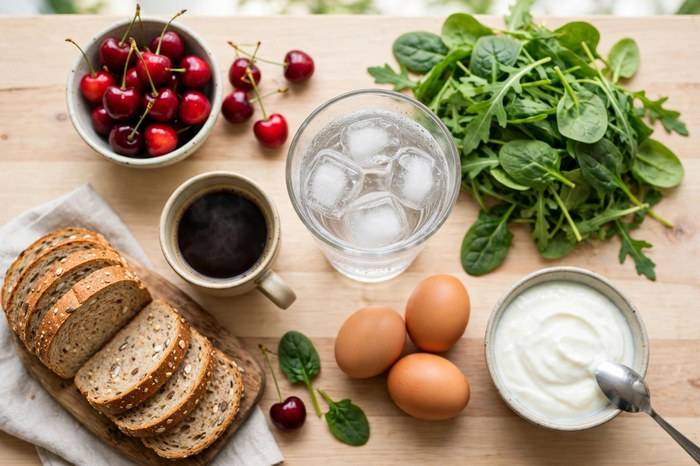
- Cherries — studies have associated cherry intake (fruit or extract) with a lower risk of gout flares. They aren't a treatment, but as a snack they're a smart swap.
- Low-fat dairy — milk proteins appear to help the kidneys excrete uric acid; skim milk and low-fat yogurt are consistently linked to lower levels.
- Hydration — staying well hydrated helps the kidneys clear uric acid and also protects against kidney stones, which people with gout are prone to. Our article on whether you're drinking enough water has practical ways to check.
- Vitamin C — modest uric-acid-lowering effects have been observed, but high-dose supplements aren't a substitute for diet or prescribed treatment, and doses should be discussed with a doctor.
A Gout-Friendly Day of Eating
Knowing the columns is one thing; seeing them on a plate is another. A typical day that keeps purines low without feeling like a punishment diet:
- Breakfast: Oatmeal with skim milk, a handful of cherries or berries, and coffee. (Eggs on whole-grain toast work just as well.)
- Lunch: A large vegetable and chickpea salad with an olive-oil and lemon dressing, plus a low-fat yogurt. Filling, and firmly in the "enjoy" column.
- Snack: An apple with a small handful of walnuts, and a glass of water — keep a bottle nearby all day.
- Dinner: Grilled chicken or tofu with brown rice and a generous serving of vegetables — green beans, peppers, zucchini, whatever is in season. If you eat fish, keep portions modest and choose it a couple of times a week rather than daily.
- Evening: Water or herbal tea instead of the usual beer or nightcap. This single swap is where most people feel the biggest difference over time.
The pattern to notice: protein doesn't disappear — it shifts toward eggs, dairy, legumes, and modest portions of poultry, while the drinks do much of the heavy lifting.
During a Flare: What to Do
- Rest the joint and avoid putting weight through it where possible.
- Apply ice for short periods if it feels soothing (wrap it in a cloth first).
- Drink water — hydration supports excretion; skip alcohol entirely during a flare.
- Use anti-inflammatory pain relief as directed — NSAIDs (such as ibuprofen or naproxen) are commonly used, but they're not safe for everyone (kidney problems, stomach ulcers, certain heart conditions). If you're unsure, ask a doctor or pharmacist first.
- See a doctor early, especially for a first attack. Prescription options such as colchicine or a short course of steroids work best when started promptly — and a first painful, hot joint needs to be distinguished from infection, which is an emergency.
One caution: don't start or stop long-term uric-acid-lowering medication during a flare without your doctor's advice — changing levels mid-flare can sometimes prolong it.
Lowering Uric Acid for the Long Term
- Lose weight gradually if you carry extra. Slow, steady loss lowers uric acid; crash diets and fasting can actually trigger flares, because rapid cell breakdown releases purines.
- Make the "avoid" column rare rather than daily. Occasional small portions matter far less than patterns.
- Rethink drinks first. For many people, cutting beer and soda is the single highest-impact change.
- Get checked. Uric acid is a cheap blood test. Ask for it if you've had a suspicious attack or have risk factors — and know your number.
- Take medication seriously if it's prescribed. For frequent flares or tophi, doctors commonly prescribe urate-lowering therapy such as allopurinol, often aiming to keep uric acid below 6 mg/dL so crystals gradually dissolve. Diet alone, while powerful, doesn't always get levels low enough — and needing medication isn't a personal failure, since genetics and kidney function do much of the deciding.
Frequently Asked Questions
What is the fastest way to lower uric acid?
There's no instant fix. During a flare, the goal is calming inflammation with rest, ice, and anti-inflammatory treatment. For the level itself, the fastest meaningful changes are cutting alcohol and sugary drinks, hydrating well, and — when prescribed — taking urate-lowering medication, which lowers levels over weeks. Dietary change shows results over weeks to months.
Are eggs okay for gout?
Yes. Eggs are very low in purines and make a useful protein source when you're cutting back on meat and seafood.
Can drinking water really help gout?
Yes — it's one of the simplest evidence-backed habits. Good hydration helps the kidneys excrete uric acid and reduces the risk of uric acid kidney stones. Aim for pale-yellow urine as a rough guide, unless your doctor has given you a fluid restriction.
Is gout curable?
The flares are highly controllable and, with uric acid kept low enough for long enough, existing crystals can dissolve and attacks can stop entirely. The underlying tendency usually remains, so maintenance habits (and medication, if prescribed) are long-term. Think "fully manageable" rather than "gone forever."
Which fruit is best for gout?
Cherries have the strongest research association with fewer flares. Citrus fruits add vitamin C and hydration. Whole fruit is generally fine — it's fruit juice and added fructose you want to limit, not fruit itself.
When to See a Doctor
- A first attack of a hot, swollen, severely painful joint — it needs diagnosis, and joint infection must be ruled out
- Flares that keep returning (two or more a year), since long-term treatment is likely warranted
- Firm lumps forming near joints, ears, or fingers (possible tophi)
- Kidney stones, kidney disease, or blood tests showing high uric acid
- A flare that doesn't improve within a few days, or comes with fever — seek care promptly
The Bottom Line
Gout is your body's alarm bell for high uric acid, and diet is one of the loudest levers on that alarm: less beer and soda, smaller roles for organ meats and shellfish, more water, dairy, vegetables, and cherries. Pair that with gradual weight loss and a blood test to see your number.
And if flares keep coming despite good habits, that's not a failing — it's a sign to add medical treatment to the plan. Nobody should be losing nights of sleep to a toe if they don't have to.
Medical disclaimer: The content on HealthyZo is for informational purposes only and is not a substitute for professional medical advice, diagnosis, or treatment. Always seek the advice of your physician or another qualified health provider with any questions about a medical condition.