15 Foods That Boost Your Immune System Naturally

Key Takeaways
- No food boosts immunity overnight — consistent nutrition matters.
- Vitamin C, vitamin D, zinc, and protein have the strongest evidence.
- Citrus, red bell peppers, garlic, yogurt, and spinach cover most of your bases.
- Sleep, stress, and sugar affect your immunity as much as food does.
- Supplements help only when you’re deficient — food comes first.
Every winter the same thing happens — pharmacy shelves empty of “immunity” products. Truth: no food upgrades immunity overnight. Think of the immune system like a garden — it thrives with consistent tending. But food matters: immune cells are built and fueled by nutrients. This guide covers 15 foods with the strongest evidence, the key nutrients behind them, a sample day of eating, and the money-wasting myths you can skip.
This article is for informational purposes only and is not medical advice. If you have a health condition or concerns about your immune system, talk to a qualified healthcare professional.
How Does Your Immune System Actually Work?
Your immune system has two branches: innate immunity (first responders — skin, macrophages) and adaptive immunity (T-cells and B-cells that learn and remember threats). Both run on nutrients — immune cells burn through vitamin C, zinc, and protein constantly. “Boosting” is the wrong word — what you really want is supporting: steady fuel, day after day.
What Are the 15 Best Immune-Boosting Foods?
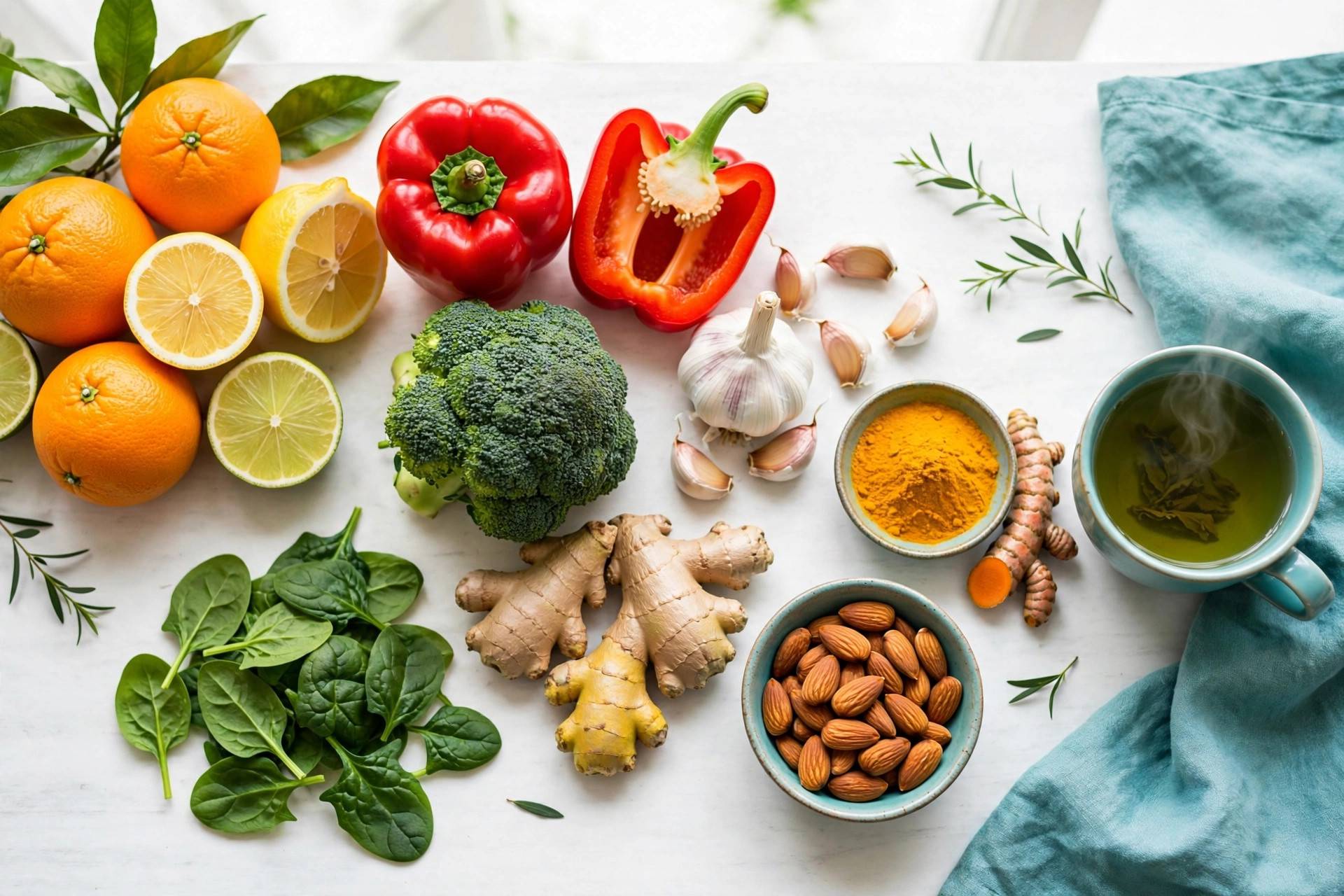
- Citrus Fruits — a vitamin C powerhouse; one orange covers your daily needs.
- Red Bell Peppers — twice the vitamin C of citrus, plus beta-carotene.
- Broccoli — vitamins A, C, and E; steam it lightly to keep the goodness.
- Garlic — allicin compounds; crush and rest 10 minutes before cooking.
- Ginger — anti-inflammatory; great in tea.
- Spinach — vitamin C, beta-carotene, and iron; cook it lightly.
- Yogurt / Kefir — probiotics; look for “live cultures” on the label.
- Almonds — vitamin E plus healthy fats.
- Turmeric — curcumin; pair with black pepper for absorption.
- Green Tea — EGCG and L-theanine.
- Papaya — vitamin C plus digestive enzymes.
- Kiwi — vitamins C, K, E, and folate.
- Poultry & Bone Broth — protein, B6, and zinc; yes, chicken soup counts.
- Shellfish — a zinc powerhouse: oysters, crab, and mussels.
- Sunflower Seeds — vitamin E and selenium.
What Are the 6 Key Immunity Nutrients?
| Nutrient | Why it matters | Best food sources |
|---|---|---|
| Vitamin C | Immune cell function and skin barrier | Citrus, red bell peppers, kiwi, broccoli |
| Vitamin D | Regulates immune response; deficiency linked to respiratory infections | Sunlight, fatty fish, fortified milk |
| Zinc | Critical for nearly every immune cell | Shellfish, meat, chickpeas, pumpkin seeds |
| Selenium | Antioxidant support for thyroid and immune function | Brazil nuts (1–2/day), tuna, eggs |
| Probiotics | Support gut-associated immune tissue | Yogurt, kefir, kimchi |
| Protein | Raw material for antibodies | Poultry, fish, beans, tempeh |
What Does a Sample Immune-Boosting Day Look Like?
- Breakfast: oatmeal with kiwi and almonds, plus green tea.
- Lunch: spinach salad with chicken, bell peppers, sunflower seeds, and a citrus dressing.
- Snack: yogurt with berries.
- Dinner: salmon with broccoli and sweet potato.
- Evening: ginger-turmeric tea.
What Weakens Your Immune System?
- Poor sleep — under 7 hours raises cold risk.
- Chronic stress — cortisol suppresses immunity.
- Excess sugar — can impair white blood cells for hours.
- Alcohol and smoking.
Supplements vs Food: What Does the Evidence Say?
Food first — supplements help mainly when you’re deficient (very common for vitamin D). No supplement compensates for a poor diet or bad sleep.
What Immunity Myths Should You Stop Believing?
- Vitamin C megadoses prevent colds — no; they only help if you’re deficient.
- “Immune boosters” work overnight — no.
- More is better — excess zinc or vitamin A can actually harm you.
- Alkaline or detox cleanses — there’s no mechanism behind them.
- Weekend catch-up works — resilience builds gradually.
Frequently Asked Questions
Does vitamin C prevent colds?
Not for most people; it may shorten duration slightly. Correcting a deficiency is what matters.
How fast can you strengthen your immunity?
Think weeks to months — improvements compound over time.
What’s the best drink for immunity?
Water first; then green tea, ginger tea, kefir, and citrus water. Skip sugary juices and alcohol.
What’s the best vitamin for immunity?
Vitamin D (deficiency is common), vitamin C, and zinc — plus enough protein.
Are these foods good for winter specifically?
Yes — less sun and more indoor exposure mean you should be deliberate: citrus, a vitamin D check, and good sleep.
Can kids eat these foods?
Yes — they’re all normal foods. Note: no honey under 12 months, and no whole nuts for toddlers.
Sources & References
- NIH ODS — Vitamin C
- NIH ODS — Vitamin D
- NIH ODS — Zinc
- Cleveland Clinic — Vitamins for Immunity
- CDC — Six Tips to Enhance Immunity
Written by Putri PD. Last updated: October 2026.