
Flu Season Prevention: 12 Ways to Protect Yourself This Fall
October is when flu season starts climbing. Pharmacies put up their flu-shot signs, offices fill with coughs, and public health agencies begin their annual push: get vaccinated, wash your hands, and don't tough it out at work when you're sick.
Most of this advice you've heard before. The problem isn't knowing it — it's doing it consistently, and doing it at the right time. This guide organizes what public health agencies actually recommend for the 2026–2027 flu season into 12 practical steps, plus how to tell flu apart from a cold or COVID, what to do when symptoms hit, and when to get medical help.
Key Takeaways
- Get your flu shot in September or October. Public health agencies recommend annual flu vaccination for everyone 6 months and older; early fall is the ideal window because protection takes about two weeks to build and can wane over a long season.
- Flu hits suddenly; colds creep in. Abrupt high fever plus body aches is the classic flu pattern — see the comparison table below.
- Hygiene still matters most after vaccination: handwashing, not touching your face, and staying home when sick.
- Act fast at first symptoms. Prescription antivirals for flu work best when started within 48 hours.
- Know the red flags: difficulty breathing, chest pain, confusion, or symptoms that improve then suddenly worsen all warrant prompt medical care.
1. Get vaccinated — and time it right
Annual flu vaccination remains the single most effective prevention step, and public health agencies recommend it for everyone 6 months and older. For the 2026–2027 season, the guidance emphasizes timing: September and October are the preferred months for most people. The vaccine takes about two weeks to reach full effectiveness, and getting it too early in summer means protection can fade before the season ends.
If you miss the October window, don't skip it — vaccination is still worthwhile as long as flu viruses are circulating. Adults 65 and older are advised to preferentially receive a high-dose, recombinant, or adjuvanted flu vaccine when available, since standard doses produce a weaker immune response in older adults. People with egg allergies can receive any age-appropriate flu vaccine. And notably, 2026 brought the first approved mRNA flu vaccine in the U.S., an egg-free option for adults 50 and older — ask your provider or pharmacist what's available near you.
2. Wash your hands — properly
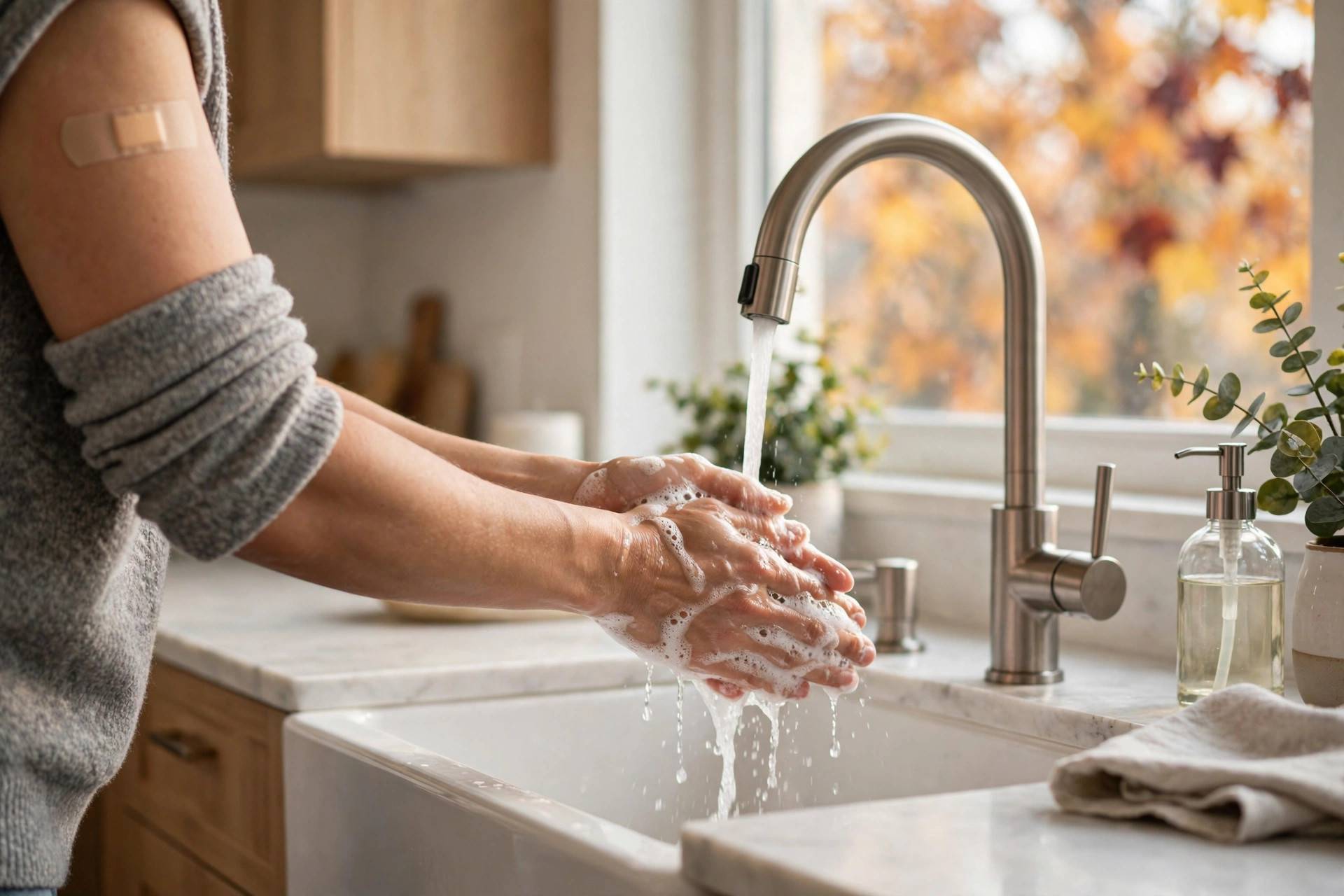
Flu viruses spread through droplets and contaminated surfaces, and hand hygiene remains one of the cheapest, most effective defenses. The guidance is simple: soap and water for at least 20 seconds, especially after being in public spaces, before eating, and after coughing or sneezing. When soap isn't available, use a hand sanitizer with at least 60% alcohol. The key word is consistently — one thorough wash after your commute matters more than a hurried rinse.
3. Stop touching your face
Your eyes, nose, and mouth are entry points for respiratory viruses, and most people touch their face far more often than they realize. This is one of the hardest habits to break and one of the most valuable. If you wear contact lenses or tend to rub tired eyes at your desk, keep tissues or hand sanitizer within reach as a substitute ritual.
4. Keep your distance from sick people — and stay home when you're the sick one
Avoiding close contact with people who are visibly ill sounds obvious, but the harder half is the reverse: staying home when you feel something coming on. Public health guidance is clear that staying home while sick protects everyone around you, especially older adults, young children, pregnant people, and anyone immunocompromised. If you must go out while recovering, wearing a mask in crowded indoor spaces is a reasonable courtesy.
5. Disinfect high-touch surfaces
Doorknobs, light switches, phones, keyboards, faucet handles — flu viruses can survive on hard surfaces for hours. You don't need to sterilize your home, but a regular wipe-down of the surfaces everyone touches, especially during peak season, is a sensible layer of defense. Your phone deserves special mention: it's pressed to your face daily and rarely cleaned.
6. Ventilate indoor spaces
Respiratory viruses spread more easily in stuffy, crowded indoor air. Opening windows when weather allows, using exhaust fans, and spending time outdoors instead of in packed indoor spaces all reduce your exposure. This is one of the simplest structural changes you can make at home and at work.
7. Sleep enough — consistently
Chronic short sleep weakens immune defenses; this is one of the most consistent findings in sleep and immunity research. Adults generally need 7–9 hours. During flu season, treat sleep as part of your prevention plan, not a luxury: a regular bedtime, a dark cool room, and screens off well before bed. If stress is wrecking your sleep, addressing that pays double dividends.
8. Eat to support your immune system
No single food prevents the flu, but a diet rich in fruits, vegetables, whole grains, and adequate protein gives your immune system the raw materials it needs. Nutrients with the strongest evidence for immune support include vitamin C, vitamin D, zinc, and selenium — all readily available from whole foods. For a deeper dive, see our guide to foods that boost the immune system.
9. Don't neglect vitamin D in the darker months
As daylight shrinks in fall and winter, vitamin D levels tend to drop — and vitamin D plays a recognized role in regulating immune responses. Public health agencies in several countries advise supplementation during autumn and winter for people with limited sun exposure. Food sources (fatty fish, fortified milk, egg yolks) help, but many people need more in the darker months. Our article on vitamin D deficiency signs covers who's most at risk.
10. Manage stress
Prolonged stress suppresses immune function — that's not folk wisdom, it's well-established physiology. You can't eliminate stress during flu season (or ever), but regular exercise, time outdoors, social connection, and genuine downtime all blunt its immune impact. Even brief daily walks count.
11. Exercise moderately — but don't overdo it when sick
Regular moderate exercise supports immune function. The caveat matters: intense training while you're fighting off an infection can backfire. The common-sense rule athletes use — symptoms above the neck (runny nose, sneezing), light activity is usually fine; symptoms below the neck (chest congestion, body aches, fever), rest — is a reasonable guide.
12. Support your gut
A large share of your immune system is associated with gut tissue, and diet diversity, fiber, and fermented foods all support a healthy gut microbiome — which in turn supports immune regulation. This is a long-game strategy, not a quick fix, but it's one more layer. See how to improve gut health naturally for the practical steps.
Flu vs. cold vs. COVID: how to tell them apart
These three circulate at the same time every fall and winter, and their symptoms overlap heavily. This table summarizes the typical patterns described in public-health guidance — but symptoms alone can't give you a diagnosis. Testing is the only reliable way to know which virus you have.
| Symptom | Common cold | Flu (influenza) | COVID-19 |
|---|---|---|---|
| Onset | Gradual, over a day or two | Sudden — often within hours | Gradual or sudden |
| Fever | Rare | Common, often high | Common |
| Body aches | Mild | Often severe | Common, moderate to severe |
| Fatigue | Mild | Extreme | Can be extreme |
| Cough | Mild | Common, usually dry | Common, usually dry |
| Sneezing / stuffy nose | Very common | Sometimes | Sometimes |
| Loss of taste or smell | Rare | Rare | Sometimes |
| Shortness of breath | Rare | Rare | Possible |
The single most useful differentiator: speed. If you felt fine at lunch and terrible by dinner — with fever and body aches arriving together — that abrupt pattern points toward flu. A cold announces itself slowly with a scratchy throat and congestion. COVID is the wildcard, which is why testing matters.
What to do at the first symptoms
Speed matters more than perfection here:
1. Isolate and rest. Stay home, cancel plans, and give your body the energy to fight. Pushing through tends to prolong illness. 2. Test if COVID is possible. Home rapid tests are convenient; if the first test is negative but symptoms persist, repeat after a day or two, since early tests can miss infections. 3. Ask about antivirals — fast. Prescription flu antivirals work best when started within 48 hours of symptom onset; COVID antivirals for higher-risk people are typically started within five days. Don't wait to see if you get worse — call your provider or pharmacist promptly. 4. Treat symptoms, stay hydrated. Fluids, rest, and over-the-counter fever and pain relievers (used as directed) cover most mild cases. Antibiotics don't help viral infections. 5. Watch the trajectory. Most uncomplicated flu improves within one to two weeks, though fatigue and cough can linger.
When to see a doctor
Most healthy adults recover from flu at home. Seek prompt medical care if you experience any of the following:
- Difficulty breathing or shortness of breath
- Persistent chest pain or pressure
- Confusion or difficulty waking up
- Severe weakness or dizziness
- Symptoms that improve, then suddenly worsen (this can signal a secondary bacterial infection)
- Fever that doesn't come down with medication
People at higher risk — adults 65 and older, young children, pregnant people, and those with chronic conditions like asthma, diabetes, or heart disease — should contact a healthcare provider early in the illness rather than waiting. If you're due for preventive care anyway, fall is a good time to schedule it; see our guide to medical checkups by age.
The bottom line
Flu prevention isn't one big action — it's a stack of small ones. Vaccination in September or October is the foundation; hand hygiene, distance from illness, sleep, nutrition, and stress management are the layers on top. None is perfect alone; together, they meaningfully cut your risk.
And if the flu finds you anyway despite your best efforts, remember: that's not failure. It means the rest of the plan — rest, fluids, early antivirals, knowing the red flags — is what carries you through.
Medical disclaimer: This article organizes publicly available health information for educational purposes. It is not medical advice and does not replace professional medical judgment. If you have health concerns, are in a high-risk group, or experience severe symptoms, consult a qualified healthcare provider.