
How to Lower Blood Pressure Naturally
High blood pressure (hypertension) is called the silent killer for a reason: it usually causes zero symptoms while quietly damaging your arteries, heart, brain, and kidneys year after year. Nearly half of adults have it, and many don't know.
Here's the encouraging part: blood pressure responds remarkably well to lifestyle changes — often as powerfully as a single medication. This guide covers the strategies with the strongest evidence, roughly in order of impact.
Quick note: This article is for general information only and isn't medical advice. If you're on blood pressure medication, don't stop it without your doctor — natural approaches work best alongside medical care, and some (like major sodium cuts) need supervision with certain drugs. If your readings are ever extremely high (e.g., above 180/120) with symptoms like chest pain or trouble breathing, seek emergency care.
First: know your numbers
Blood pressure is measured as systolic (top number — pressure when the heart beats) over diastolic (bottom — pressure between beats), in mmHg. Current AHA categories:
Normal: below 120/80
Elevated: 120–129 systolic, below 80 diastolic
Stage 1 hypertension: 130–139 / 80–89
Stage 2 hypertension: 140+ / 90+
A single high reading doesn't diagnose hypertension — readings vary through the day. Diagnosis is based on patterns: multiple readings on different days, or 24-hour monitoring. Home cuffs are good for tracking trends; measure seated, rested, same time daily.
1. Cut sodium — the biggest dietary lever
Excess sodium makes your body hold water, raising blood volume and pressure. Most adults consume far more than needed, largely from processed foods, bread, restaurant meals, and condiments — not the salt shaker.
Practical moves:
Cook more at home (you control the salt)
Read labels — bread, soup, sauces, and deli meats are stealth sources
Flavor with herbs, spices, garlic, lemon, and vinegar instead
Rinse canned beans to cut sodium substantially
General guidance often cites keeping sodium under about 2,300 mg/day, with lower targets (around 1,500 mg) for people with hypertension — but discuss your target with your doctor, since very low sodium isn't right for everyone.
2. Eat more potassium
Potassium helps your body excrete sodium and eases tension in blood vessel walls. The catch: most people get too little. Rich sources: bananas, potatoes, sweet potatoes, spinach, beans, lentils, avocados, oranges, yogurt. (If you have kidney disease or take certain blood pressure drugs like ACE inhibitors, potassium needs medical supervision — too much is dangerous in that context.)
3. Follow the DASH eating pattern
The DASH diet (Dietary Approaches to Stop Hypertension) was designed specifically for blood pressure and has the strongest dietary evidence base: rich in fruits, vegetables, whole grains, lean protein, and low-fat dairy; low in sodium, sweets, and red meat. In trials, it lowered blood pressure significantly — comparable to some medications. You don't need to follow it perfectly; moving your eating toward DASH is what counts. Our heart-healthy foods guide overlaps heavily and is a good companion read.
4. Lose excess weight (even a little helps)
Blood pressure rises with body weight — and the relationship is dose-responsive in reverse, too. Even modest weight loss (5–10% of body weight) produces meaningful blood pressure drops in people with overweight. You don't need to reach an "ideal" weight to benefit; every bit helps.
5. Exercise regularly — the closest thing to a wonder drug
Aerobic exercise (brisk walking, cycling, swimming) reliably lowers blood pressure — regular sessions can reduce systolic readings by several points on average, with effects comparable to some first-line medications in studies of mild hypertension. Aim for around 150 minutes of moderate activity per week, plus strength training twice weekly. The effect is partly acute (pressure drops for hours after each session) and partly chronic (resting pressure falls over weeks).
6. Limit alcohol
Alcohol raises blood pressure in a dose-dependent way — and the effect is bigger than most drinkers realize. Cutting back is one of the faster-acting interventions; heavy drinkers often see readings fall within weeks of reducing. If you drink, moderation means up to one drink daily for women and two for men by standard definitions — less is better for blood pressure specifically.
7. Quit smoking (and avoid secondhand smoke)
Every cigarette spikes blood pressure temporarily, and long-term smoking stiffens arteries permanently. Quitting is one of the highest-impact things you can do for your cardiovascular system overall — blood pressure included. Our cholesterol guide covers more of the heart-health picture.
8. Manage stress
Chronic stress keeps the body's fight-or-flight system engaged, nudging pressure upward — and stress drives the behaviors (poor sleep, drinking, salty comfort food, skipping exercise) that raise it further. Daily stress management (walks, breathing exercises, adequate sleep, time outdoors) isn't soft advice; it's blood pressure treatment.
9. Sleep 7–8 hours — and check for sleep apnea
Short sleep and fragmented sleep both raise blood pressure. Obstructive sleep apnea — loud snoring, gasping awake — is a particularly potent cause of resistant hypertension: repeated oxygen drops through the night keep pressure elevated around the clock. If you snore heavily and your pressure won't budge, get evaluated. Treating apnea often improves blood pressure substantially.
10. Specific foods worth emphasizing
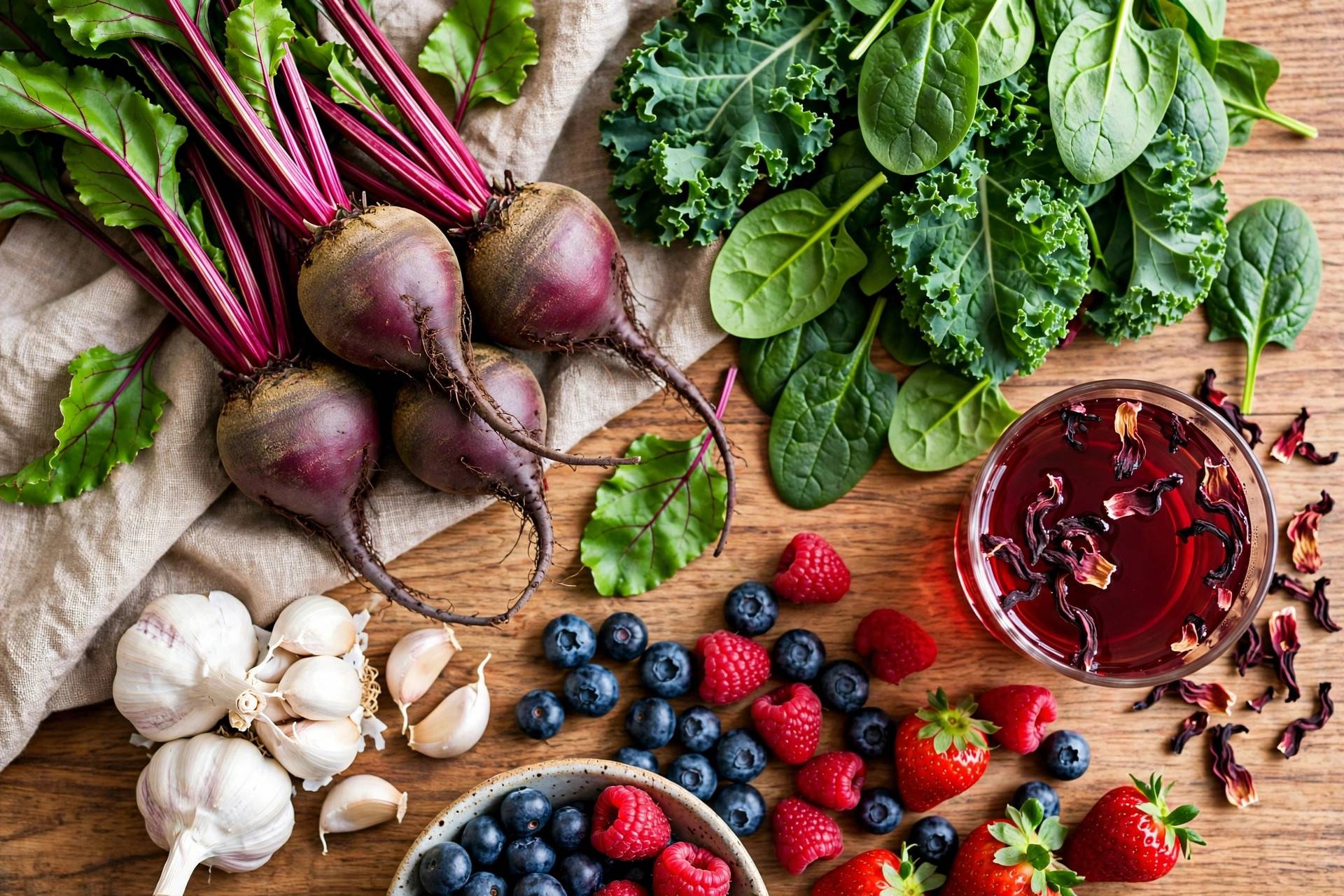
Beets and beet juice — dietary nitrates convert to nitric oxide, which relaxes blood vessels; modest but real effects in trials
Leafy greens — nitrates plus potassium
Berries — flavonoids associated with better vascular function
Garlic — aged garlic extract shows modest blood pressure effects in some trials
Hibiscus tea — a few small trials show meaningful reductions; a pleasant daily habit
Dark chocolate (in moderation) — flavanols, small effect, don't overdo the calories
None of these replaces the big levers above — they're garnish on a solid foundation.
What about "quick" fixes?
You'll see claims about lowering blood pressure in minutes (cold water, breathing tricks, specific poses). Slow breathing can produce a small temporary dip — useful before a reading, not as treatment. There is no safe instant fix for chronic hypertension. The strategies above work over weeks, and that's what protects your arteries long-term.
How the pieces fit together
Blood pressure is multifactorial, which is actually good news: you have many levers, and they stack. Someone who trims sodium, walks daily, loses 5% of body weight, and sleeps better will typically see a larger combined drop than any single change delivers. Start with the two or three that fit your life best, then layer.
And keep monitoring. Home readings tell you what's working — which is motivating in itself.
Home blood pressure monitoring: doing it right
Technique matters — bad technique produces bad data and unnecessary worry:
Cuff: upper-arm cuffs beat wrist cuffs for accuracy. The cuff must fit — too small reads falsely high.
Position: seated, back supported, feet flat on the floor, arm supported at heart height. No talking during the measurement.
Timing: rest 5 minutes first. Avoid caffeine, exercise, and smoking for 30 minutes before. Measure at the same times daily (morning before meds and evening are standard).
Protocol: take two readings 1–2 minutes apart and average them. Discard the very first reading of a session if it's much higher (that's often just the surprise of the cuff inflating).
Log it: a simple notebook or phone note with date, time, and both numbers. Bring it to appointments — doctors trust logged home readings more than single office readings (which run high from "white coat" effect in many people).
When lifestyle isn't enough: the medication conversation
There's a point where lifestyle maxes out, and that's not failure — it's physiology. Guidelines generally recommend medication alongside lifestyle when readings stay in stage 2 range, or stage 1 with additional cardiovascular risk factors (diabetes, existing heart disease, high overall risk). Common first-line classes (thiazide diuretics, ACE inhibitors, ARBs, calcium channel blockers) are well-studied and mostly well-tolerated.
The goal isn't "no pills at any cost" — it's the lowest overall cardiovascular risk. Often that's lifestyle + a low-dose medication, which together outperform either alone. And lifestyle still matters on medication: it can mean lower doses and fewer drugs.
Frequently asked questions
How long does it take to lower blood pressure naturally? Some changes act fast (cutting alcohol, reducing sodium — days to weeks); others build over weeks to months (exercise, weight loss, DASH eating). Meaningful sustained change typically shows within 4–12 weeks of consistent effort.
Can you lower blood pressure without medication? Many people with mildly elevated or stage 1 hypertension can — lifestyle changes are first-line treatment in guidelines. More severe hypertension usually needs medication plus lifestyle. This is a with-your-doctor decision, not a DIY one.
Does coffee raise blood pressure? Caffeine causes a temporary spike, especially in non-habitual drinkers. Regular coffee drinkers develop partial tolerance, and large studies don't show coffee causing chronic hypertension in most people. If your pressure is borderline, test your own response — but coffee is rarely the main driver.
What's the fastest way to lower blood pressure in an emergency? There isn't a safe at-home emergency fix. Extremely high readings with symptoms (chest pain, severe headache, vision changes, trouble breathing) need emergency care immediately — don't try to manage a hypertensive crisis yourself.